






Driven by an enthusiasm for energy and a desire to learn, David Morton continues his post-regulatory career working on energy reliability issues
By Graham Chandler
“I have always been interested in energy – it was one of the things that drew me to Mechanical Engineering,” says David Morton, P. Eng. ICD.D. He is currently the CEO of the Canadian Energy Reliability Council; Executive in Residence, Positive Energy, University of Ottawa; and Chair, International Confederation of Energy Regulators (ICER).
“My primary entry point to the energy industry was through the regulation of utilities,” he explains. “Utilities companies are often the sole suppliers of energy services in an area. This makes them what economists call ‘monopoly suppliers’ – whose prices are not generally subject to any market influence from a competitor. This potentially puts the customers at risk of overpaying or receiving service that is sub-optimal.”
Utility regulators are primarily ‘economic regulators’ and their role is to be a stand-in for those market forces to try to protect customers, he explains. They also must ensure that the utility collects enough revenues to provide them the opportunity to earn a fair return on the typically considerable investments they must make in utility infrastructure.
“It is this need to balance economic interests that appeals to me, in addition to my general interest in energy,” says Morton. “The public interest aspects of ensuring that utilities provide safe and reliable energy, that the public is protected from any excesses of monopolistic suppliers and that utilities can earn a fair return are challenging, interesting and, when one succeeds, rewarding.” And that has driven his career.
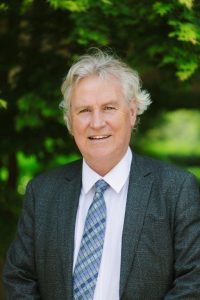
David Morton was born in the UK and lived there until he was 9, when his family moved to Canada. “My parents had a bit of wanderlust and I ended up going to school in Thunder Bay, Winnipeg, Orlando, Florida and several places in Southern Ontario,” he says. That wanderlust has somewhat manifested itself in his career choices, too: the starting point of which was a Bachelor of Applied Science in Mechanical Engineering from the University of Toronto in 1977.
Prior to the energy and utility industries, he spent a lot of his early career in IT. “It began with an interest in what was often called visual computing in the late 1970s and early 1980s,” he says. “I co-founded a company to develop software to build visual simulations and models.” That was ground-breaking at the time in a world where personal computers had just been introduced, and they displayed only a limited number of characters on a ‘green screen’. “I used the software we developed to build models for various projects, including for Vancouver Airport’s terminal expansion and second runway.”
The success of that project prompted him to pursue a career in the burgeoning IT field. “I managed various IT development projects for corporate and government clients,” he recounts. “Many of these were custom-built and required a good understanding of the needs of the people who will use the system and the ability of the software to meet those needs, given the budgetary constraints of the project.”
Then, in 2010, he became aware of an opening for a part-time Commissioner at the BC Utilities Commission. He was very interested and thought, “I could integrate this into my other work. However, the work was so interesting that I ended up taking on more and more files. Then about five years later, the Chair and CEO position became available and I put my hat in the ring—and was successful. This position allowed me to apply my leadership skills to benefit all British Columbians. It has been an honour to serve as one of the longest-serving leaders of the BCUC.” “One of the considerations is the scale and scope of the energy provided by natural gas,” he says. “It currently supplies more energy than does electricity, and some of the uses that natural gas serves are very difficult to meet with electricity – cement-making, for example.”
While it is theoretically possible to replace natural gas with electricity, that’s at the very least a doubling of the amount of electricity we currently generate in Canada, says Morton. “And the backdrop for this doubling is that we may also need additional electricity if we are going to electrify our transportation network by replacing petroleum-based fuels with electricity and if we are going to electrify liquefaction of natural gas to build an LNG export sector.” All in addition to providing increasing amounts of electricity to support data centres and AI processes and meeting the increasing demand for electricity for a growing population, he adds. “Although one should never say never, given the state of technology and the energy infrastructure at this time, it is unlikely Canada will abandon gas as a resource” he says.

“I am not pro-natural gas and anti-electric,” Morton adds. “I try to bring a balanced view and ask the questions that are difficult to answer. I do think we need to keep an open mind and be aware of the challenges and limitations of any particular energy pathway. I am on the board of the Western Electricity Coordinating Council, which is responsible for compliance and enforcement of electric reliability standards in a region called the “western interconnect” – consisting of 17 US states along with parts of northern Mexico, BC and Alberta. So electricity reliability is a topic that is important to me—as is energy reliability in general.”
Morton says that the desire for balance extends to his lifestyle. “Working is important to this balance, and for it to be successful, you have to enjoy what you do. I am extremely fortunate to be able to say that I am passionate about the work I continue to do – even though I am past retirement age.”
For example, David continues to engage with his regulatory colleagues internationally as the volunteer Chair of the International Confederation of Energy Regulators (ICER).
There’s more: “I have recently initiated a new endeavour called the Canadian Energy Reliability Council (CERC),” he says. “The Council’s mission is to build new models of collaboration across the entire energy system and help reframe how policy-makers and the public think about reliability,” he says. “Energy reliability is a topic that is very important to all of us, but seems to often take a back seat to other issues that may be perceived as more pressing. I am very pleased to be able to pursue this initiative.”
Another accomplishment he notes with pride is regular participation in speaking engagements and international teaching opportunities to other regulators around the world. “I have worked with regulators and governments in Botswana, Macedonia, Zambia, Namibia, Moldova, Sri Lanka, Argentina, Bosnia, Dominica, Papua New Guinea, Brazil, Kazakhstan, and Bangladesh.”
Together with these and numerous extracurricular activities, “one of my hobbies is to try to understand history,” he says. “As the Spanish philosopher George Santayana said: Those who cannot remember the past are condemned to repeat it. I think in many ways we are at a crossroads, and as a society we are far too ready to discard the lessons of history.”
So that family wanderlust never really lifted its grip on David. Although in slightly different forms, it’s still there. “When not doing anything energy- or utility-related, I enjoy travelling – both locally and internationally,” he says. “I am fortunate to live in such a beautiful part of the world – I never tire of the scenery of the West Coast. I find travelling internationally opens my eyes and my mind to other cultures and other perspectives. It is also an opportunity to learn more about our shared history that binds us all together.”