






What is energy efficiency?
In the energy sector, there is an old adage that states that the best form of energy is the one that is not used. In practical terms, this usually refers to energy efficiency – the ability to use less energy to perform a specific task or produce a specific output. It is often expressed as a percentage of the energy input that is converted into useful energy output. Energy input often refers to a fuel source, such as natural gas and gasoline. Useful energy output may refer to heating for buildings, electricity production, or running the engine of a car. For example, something that is 50% energy efficient means that 1 kW of energy input will produce 0.5 kW of useful energy output.
Energy efficiency has become increasingly important in today’s conversations as a way not just to reduce greenhouse gas (GHG) emissions but to help maintain affordability. Over the years, technological advancements and innovations have made natural gas equipment significantly more efficient, allowing gas customers to realize energy and cost savings.
Canada’s homes are getting more efficient
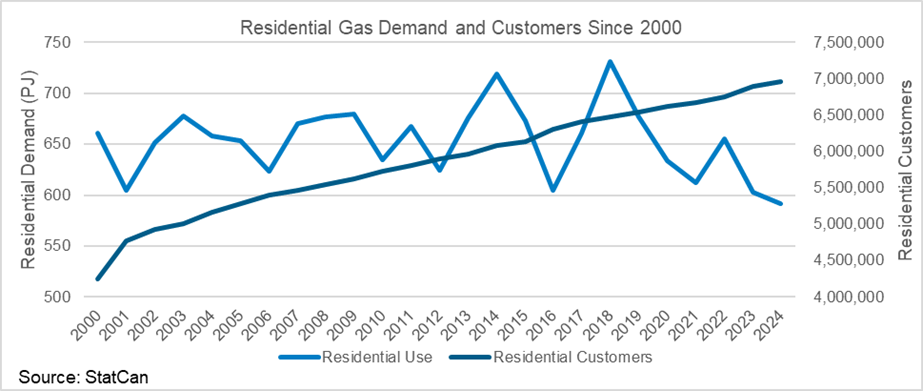
One of the sectors where this has been most apparent has been the residential building sector. This is best illustrated by the data shown in Figure 1. The number of residential gas customers in Canada has steadily increased over the years. Between 2000 and 2024, the natural gas customer base has increased by a total of 65%, growing from 4.2 million to nearly 7 million.

Figure 1 also shows the total natural gas demand in the residential sector. Regardless of year-over-year fluctuations due to weather, the overall trend indicates that the residential gas consumption has remained largely the same since 2000. Initially, this may seem surprising: how can the customer base have grown more than 65% across the sector without increasing the total amount of gas that is being consumed? The answer can be attributed to improvements in energy efficiency. Between 2000 and 2024, the average gas consumption per household decreased by 45% from 155 GJ to 85 GJ.
Figure 1:
Adopting high–efficiency technology
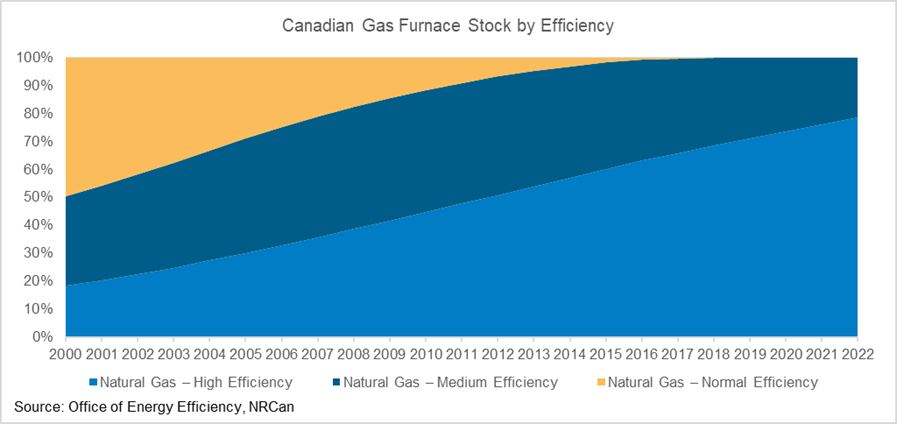
One of the most significant factors behind this improvement in energy efficiency observed previously has been the adoption of high–efficiency gas furnaces. Figure 2 illustrates the change in the gas furnace stock over the years. In 2000, about 50% of Canada’s households that heat with gas were doing so with normal efficiency furnaces, which are 62% efficient. In contrast, about 30% used medium efficiency furnaces (80% efficient) and only 20% used high efficiency furnaces (90% efficient). Today, high energy gas furnaces are the norm, making up almost 80% of the total gas furnace stock in the country. Meanwhile, normal efficiency furnaces have been entirely phased out.
Figure 2:
Demand side management programs
High-efficiency furnace upgrades, such as those that occurred throughout the 2000s and early 2010s, were done as part of what are known as Demand Side Management (DSM) programs. Utilities typically offer these programs to encourage customers to reduce energy consumption by incentivizing the adoption of energy-efficient technologies through rebates or other subsidies.
Canada’s gas utility companies have had a long history of administering DSM programs. The very first DSM program for natural gas utilities started in Ontario in 1995. Since then, Canada’s gas utilities have continued to invest millions annually to help customers save energy. Over the last decade alone, Canada’s gas utilities have invested over $2.1 billion in DSM programs, resulting in 1.9 billion m3 less of natural gas that would have been otherwise consumed.
As the conversation on energy efficiency continues to evolve, it is important to acknowledge the progress that has been made but also recognize the opportunities that still exist. High-efficiency furnaces are only one aspect of these programs. Today, DSM programs are offered across various types of customer classes to include all sorts of energy-efficient solutions, including home retrofits, smart thermostats, and even gas-absorption heat pumps. Canada’s natural gas industry is constantly innovating, including its continued commitment to energy efficiency. The effort is a key reason why natural gas remains Canada’s most affordable energy choice.